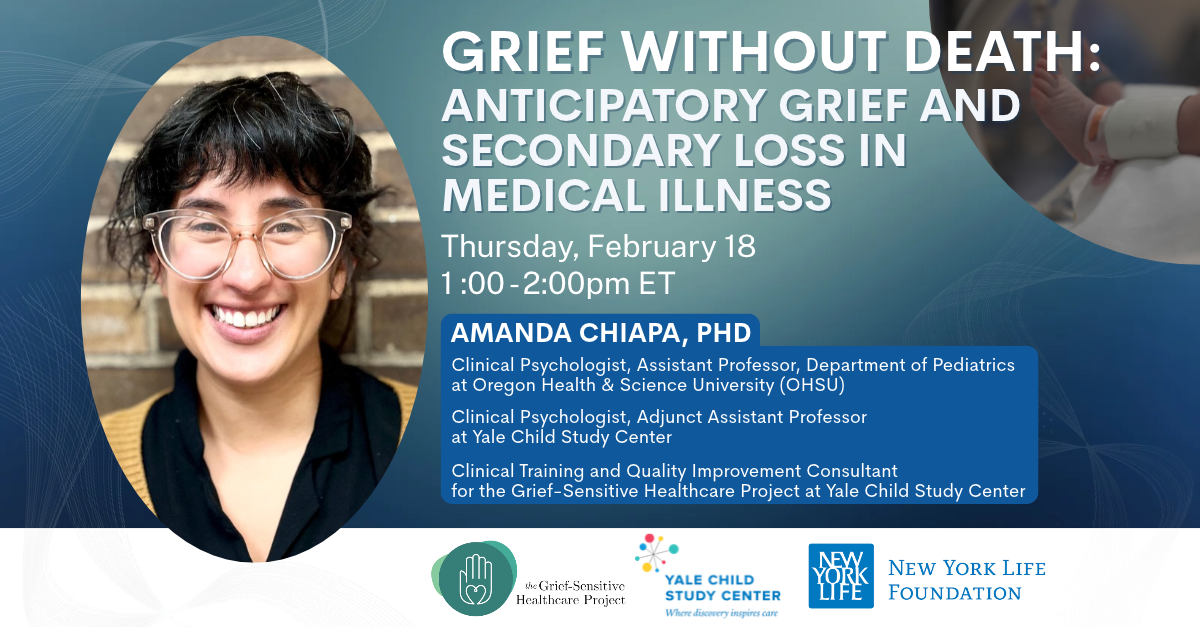
Grief Without Death: Anticipatory Grief and Secondary Loss in Medical Illness
A new diagnosis. A chronic condition that reshapes the rhythm of daily life. The quiet loss of the future a family imagined for their child. None of these involve a death. All of them can involve grief. In pediatric healthcare, children and families grieve all the time, often without anyone naming it (and too often without support).
In this webinar, licensed psychologist Amanda Chiapa, PhD, director of the inpatient pediatric psychology consult service at OHSU Doernbecher Children’s Hospital, explores what changes when clinicians view these moments through a grief-sensitive lens. Through case examples, she’ll show how grief theory and frameworks can sharpen case conceptualization and shape day-to-day clinical care, from the first conversation about a diagnosis to the long work of living with it.
Presenter:
Amanda Chiapa, PhD, Clinical Psychologist, Assistant Professor, Department of Pediatrics at Oregon Health & Science University (OHSU); Clinical Psychologist, Adjunct Assistant Professor at Yale Child Study Center; Clinical Training and Quality Improvement Consultant for the Grief-Sensitive Healthcare Project at Yale Child Study Center
Dr. Amanda Chiapa (she/her) is a licensed clinical psychologist and directs an inpatient pediatric psychology consultation/liaison service at Oregon Health & Science University's Doernbecher Children's Hospital. She is an Assistant Professor at OHSU’s Institute on Development and Disability. She is also an adjunct assistant professor at the Yale Child Study Center. Dr. Chiapa uses evidence-based approaches, including cognitive behavioral therapy, acceptance and commitment therapy, and mindfulness, to help children and families navigate anxiety, chronic medical conditions, grief and loss, and neurodevelopmental challenges. She is committed to providing culturally informed, collaborative care that builds resilience, strengthens coping skills, and addresses health disparities among marginalized and underserved populations.
Her clinical experience informs her research, which focuses on developing and evaluating interventions and educational initiatives that promote well-being among patients, families, and healthcare professionals. In her role as Clinical Training and Quality Improvement Consultant for the Grief-Sensitive Healthcare Project at Yale Child Study Center, she draws on this expertise to better understand the needs of healthcare professionals and families, strengthen grief-sensitive practices, and improve the quality of care in healthcare settings.