Foundational Elements of Grief-Sensitive Care
An Integrated Approach
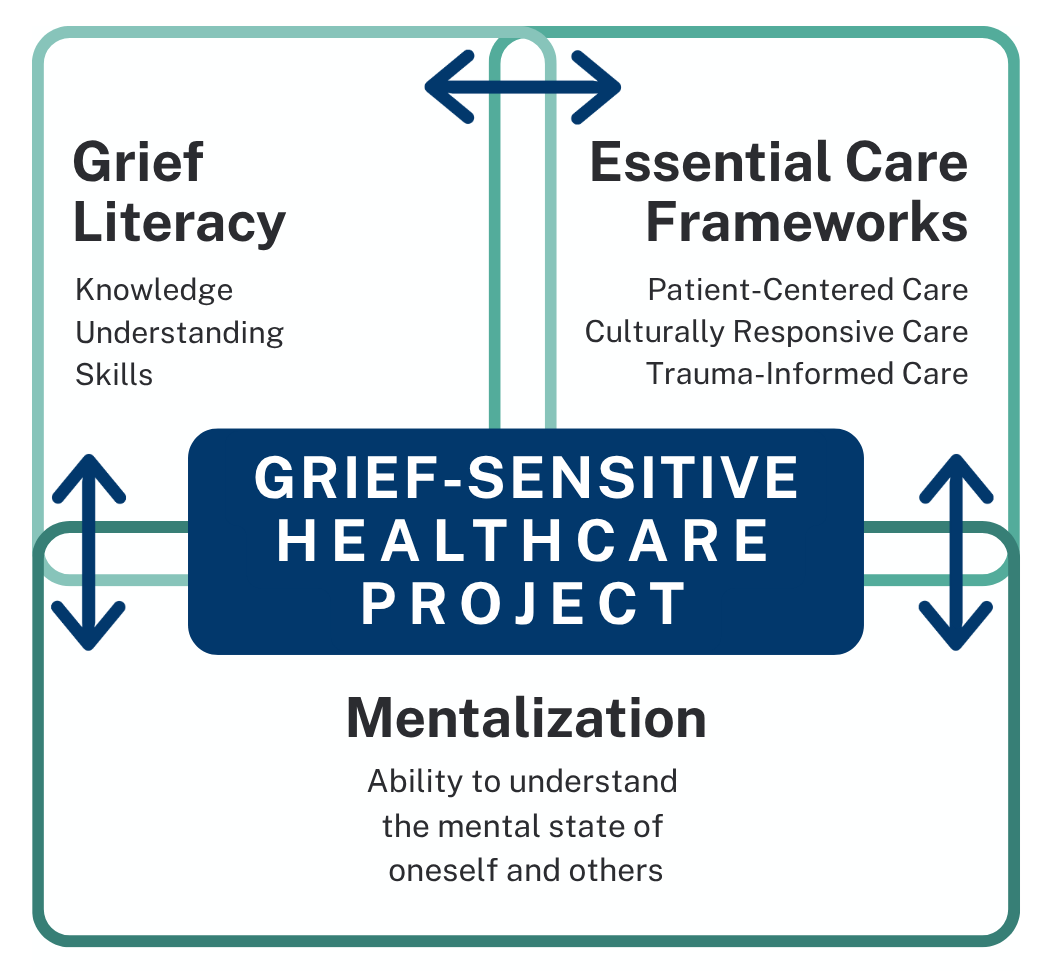
The GSHP utilizes an integrative approach, drawing upon existing research and practices including:
- Mentalization
- Grief Literacy
- Essential Patient Care Frameworks:
- Culturally Responsive Care
- Patient-Centered Care
- Trauma-Informed Care
Additional information about each foundational element is provided below.
Mentalization
Mentalization refers to the ability to reflect on our own and others’ thoughts, emotions, intentions, and internal experiences.
In healthcare, this means looking beyond observable behaviors to consider what patients, care partners, and colleagues may be thinking and carrying emotionally. This reflective lens can support more accurate understanding and strengthen connection, which can be especially important in the context of grief, loss, and high emotional stress.
Mentalization can be understood as a skill that is both natural and trainable.
While people mentalize every day, reflective practice allows this capacity to be used more intentionally in clinical work.
The GSHP also applies mentalization at the systems level. Using a reflective, systems-informed lens can support awareness of how race, ethnicity, gender identity, disability, socioeconomic status, and other lived experiences intersect with policies, workflows, power, and identity to shape experiences of trust, safety, communication, and engagement in healthcare.
Grief Literacy
Grief-sensitive care begins with accurate, up-to-date information about grief. Limited grief education and lack of exposure to contemporary grief research can contribute to outdated or overly narrow understandings of loss.
Building grief-sensitive care involves a willingness to re-examine what is understood about grief and to recognize that it can look different across individuals, families, cultures, relationships, and circumstances.
The GSHP draws upon evidence-informed strategies, contemporary grief theories and frameworks, and the lived experiences of healthcare professionals, patients, and supporters to increase grief literacy.
Essential Patient Care Frameworks
Grief-sensitive care builds upon existing healthcare approaches that emphasize compassionate, relationship-centered care and recognition of the broader experiences that shape health, communication, coping, and well-being.
- Culturally responsive care draws upon principles of cultural competence and cultural humility. It recognizes and respects the ways culture, identity, lived experience, language, and systemic inequities can shape health experiences, communication, decision-making, and access to care.
- Patient-centered care involves providing care that is respectful of and responsive to a patient’s individual needs, values, preferences, experiences, and goals, while supporting partnership and shared decision-making.
- Trauma-informed care is an approach that recognizes the widespread impact of trauma and seeks to promote safety, trust, empowerment, and compassionate care while reducing the risk of re-traumatization.
Grief sensitivity extends this work by helping healthcare professionals reflect on their own internal experience as well as the internal experiences of others, to recognize how grief and loss can shape communication, coping, decision-making, behavior, and to promote well-being across healthcare settings.