Grief-Sensitive Communication: Patients, Families, and Care Partners
Mentalization and Mindset
Mentalization refers to the ability to recognize and reflect on our own and others’ thoughts, emotions, intentions, and internal experiences.
It includes curiosity about how these inner experiences may have developed, how they influence behavior, and how they shape relationships.
Often described as the ability to “hold mind in mind,” mentalization supports seeing ourselves from the outside while trying to understand others from the inside.
A Foundation for Grief-Sensitive Care
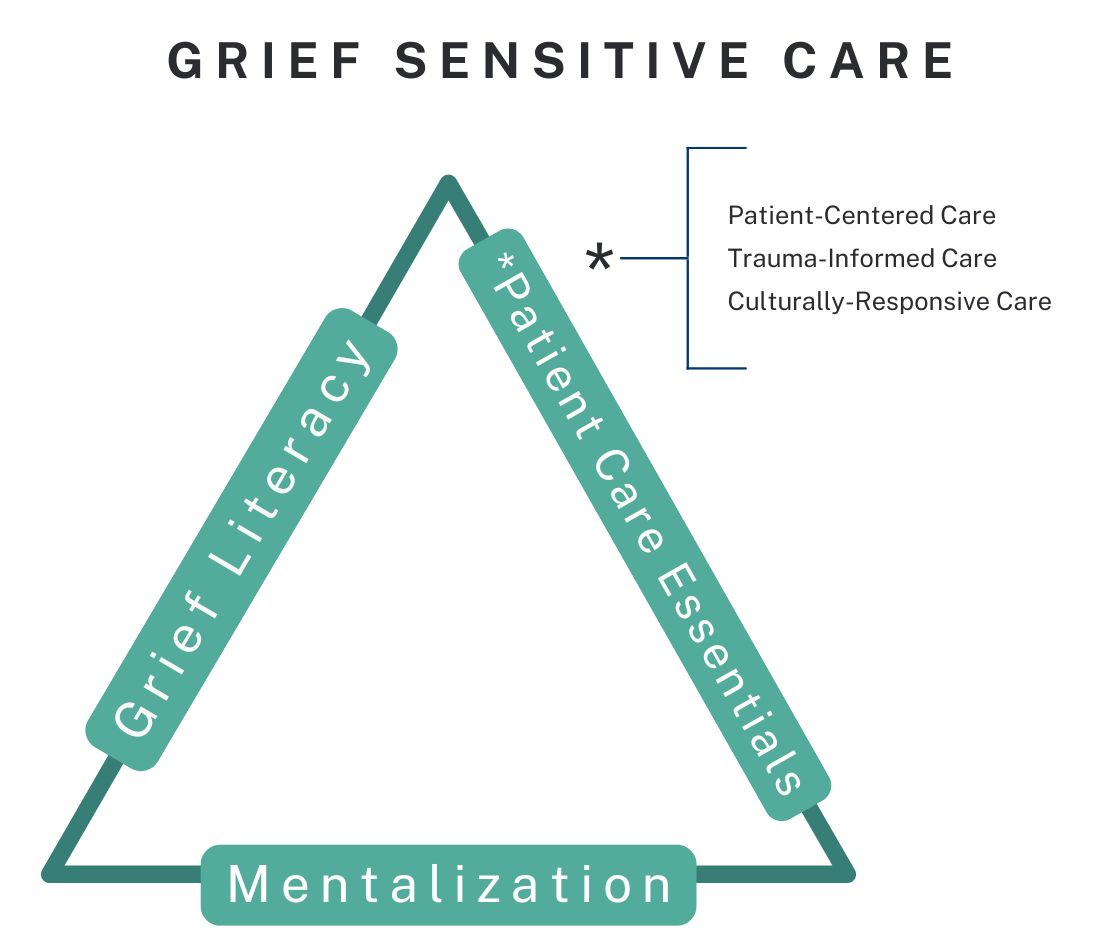
In the context of grief sensitivity, mentalization works alongside approaches such as patient-centered care, culturally responsive care, and trauma-informed care to help healthcare professionals respond more thoughtfully to the grief experiences of patients, families, and other care partners.
Mentalization provides a foundation for grief-sensitive care by helping healthcare professionals look beyond surface behaviors to consider what a patient, family member, other care partner, or colleague may be carrying.
By approaching others with curiosity rather than assumptions, healthcare professionals can create space for deeper conversations and a fuller understanding of a person's grief experience.
Mentalization in Clinical Practice
Healthcare professionals bring their own life experiences, stressors, vulnerabilities, and biases into every professional interaction.
Mentalization supports awareness of these internal factors while also remaining curious about these same factors in others.
This dual awareness can strengthen therapeutic relationships, support trust, and influence how patients engage in care, ultimately affecting health outcomes.

Mentalization can be thought of as a skill that is both natural and trainable.
Just as breathing can either be automatic or used intentionally to calm the body and regulate stress, mentalization can be harnessed to support more thoughtful, compassionate, and grief-sensitive care.
While people mentalize to different degrees in everyday life, reflective practice allows this skill to be used more intentionally in clinical work.
Research suggests that mentalization involves multiple regions of the brain working together to help people understand their own thoughts, emotions, intentions, and experiences while also considering the perspectives of others. These networks support self-reflection, social understanding, emotional processing, and relationship-building. Because mentalization relies on several complex brain systems, it can be strengthened through practice but may become more difficult during periods of stress, emotional overwhelm, or high cognitive load.
Mentalization can help healthcare professionals move beyond knowing what to do by supporting a deeper understanding of why someone may be responding the way they are.
Rather than focusing only on observable behaviors, it encourages consideration of the thoughts, feelings, experiences, and relational factors that may be influencing them.
This can be especially important during moments of stress, conflict, or heightened emotion, when assumptions and misunderstandings are more likely to occur.
Reflective Functioning and Reflective Practice
Reflective functioning describes how mentalization is expressed in everyday life through the ability to consider one's own thoughts, feelings, intentions, and experiences, as well as those of others.
In healthcare settings, reflective practice can help strengthen reflective functioning by encouraging healthcare professionals to pause, consider multiple perspectives, and remain curious about what may be happening beneath the surface. This can support clearer communication, stronger relationships, and more thoughtful decision-making.
A Mentalizing Stance in Healthcare
The mentalizing stance consists of five core components that support reflective practice and can help healthcare professionals better understand the thoughts, feelings, and experiences of others.
- Not-knowing: Acknowledging that we cannot fully know another person’s internal experience and remaining open to learning more.
- Curiosity: Maintaining genuine interest in what may be shaping a patient’s or colleague’s reactions and perspectives.
- Transparency: Sharing pieces of one’s own internal experience appropriately and thoughtfully to foster trust, safety, and mutual understanding.
- Collaboration: Engaging patients and the people who love and are about them as partners in care, recognizing the value of their insights and lived experiences.
- Critical Consciousness: Recognizing the impact of social, structural, systemic, and political factors on an individual’s grief experience and taking action towards equitable care.
This stance can help reduce biases and assumptions, support clearer communication, and create a safe and culturally responsive space for emotional and relational factors related to grief to be recognized.
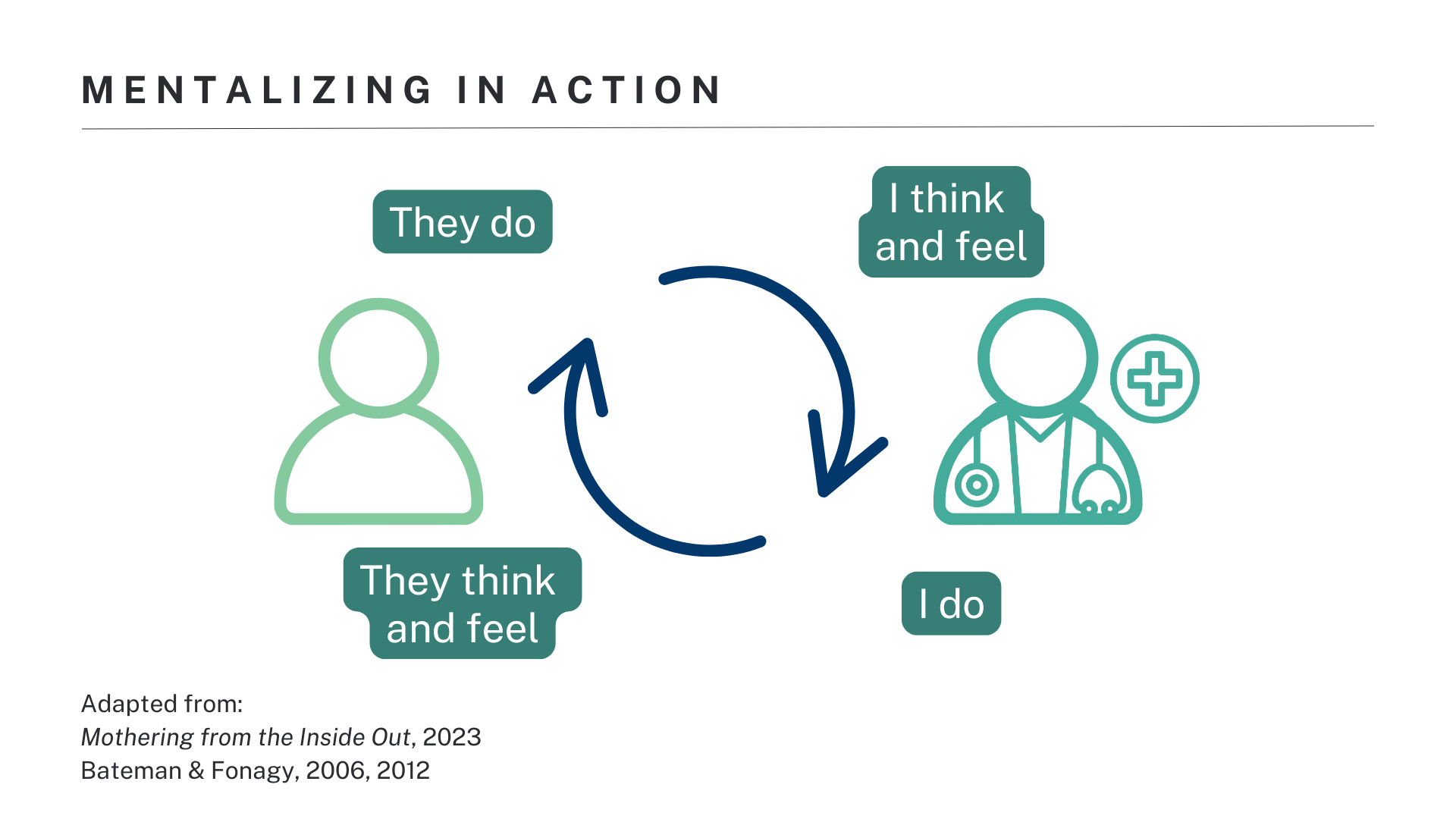
Mentalization is a reciprocal process.
People's thoughts, feelings, and behaviors can influence one another in an ongoing cycle. Because emotions and motivations are not always expressed directly or fully understood, a mentalizing mindset encourages curiosity and reflection when navigating complex, uncertain, or emotionally charged situations.
Recognizing Mentalization in Existing Practice
Many healthcare professionals already engage in mentalization and reflective practice without naming it.
In this clip, Paola Ayora, MD, MPH, describes what often feels like an intuitive process assessing readiness, staying curious, and avoiding assumptions. These everyday clinical judgments reflect core components of mentalization and show how this skill is already woven into grief-sensitive care.
Navigating Care Using Mentalization
Scenario: A patient has recently received a serious diagnosis. During follow-up, they appear disengaged, ask repetitive questions, and seem resistant to recommended next steps. The care team feels pressed for time and frustrated by perceived lack of progress.
Systems Level Mentalization
Mentalization is not only an individual skill. It also applies at the systems level.
A mentalizing healthcare system seeks to understand the emotional and relational experiences of patients, families, other care partners, and healthcare professionals while considering the organizational factors that shape those experiences.
This approach encourages curiosity about how policies, workflows, and organizational practices may affect emotional well-being, access to care, and perceptions of being heard, respected, and supported.
Because mentalization is generally easier to maintain when people feel emotionally regulated and psychologically safe, healthcare organizations play an important role in creating environments that support reflection and collaboration.
Creating space for reflection and supporting opportunities for supervision, case discussion, and interdisciplinary collaboration can strengthen reflective practice and support professional learning, self-awareness, and effective teamwork.
Why Mentalization Matters
Mentalization can support both patient care and healthcare professional well-being.
It can help foster trust, communication, and understanding in healthcare relationships and has been associated with lower levels of depression, anxiety, and stress among healthcare professionals.
Encouraging curiosity about one's own experiences and the experiences of others can help healthcare professionals recognize emotional responses, strengthen communication, and engage more effectively with patients, families and other care partners, and colleagues.